Companion Robots: The Next Trillion-Dollar Category
UBTECH just shipped the first mass-produced companion humanoid robot. Inside the financials, the demand curve, and three scenarios for what the category could be worth.
Educational content only. Nothing on this page is financial or investment advice. Full disclaimer
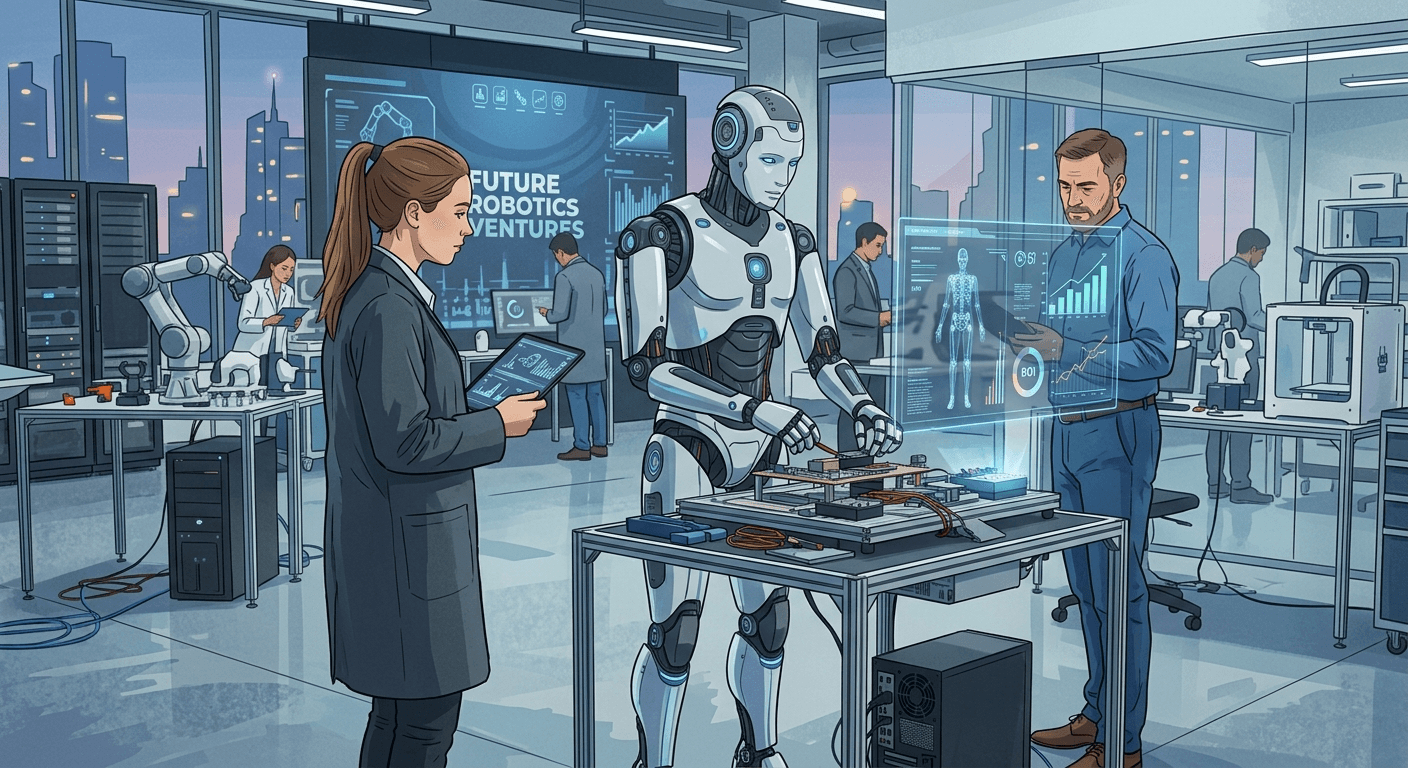
On June 30, 2026, UBTECH walked onto a stage in Shenzhen and did something no company had done before: it started mass-producing a humanoid robot built specifically to be a companion, not a warehouse picker or a factory arm. By the end of that same day, cumulative orders for the new UWORLD U1 series had passed 13,361 units. My view is simple: the market is still pricing UBTECH ($9880.HK) like an industrial robotics vendor. The filings and the launch event together tell the story of a company positioning itself to own the category that turns humanoid robots into a consumer product, and the equity has not caught up to that shift yet.
That gap, between what UBTECH is priced as and what it is becoming, is the trade.
The launch that reframes the category

Every humanoid robot demo of the last two years has been about labor: picking boxes, welding car frames, walking without falling over. The U1 series is about something else. UBTECH is calling it the world's first full-size, mass-produced, ultra-bionic humanoid robot, and the spec sheet backs up the marketing.
The lineup ships in three tiers: the U1 Lite semi-torso edition, the full-body U1 Pro, and the high-dynamic full-body U1 Ultra, priced from RMB 119,800 (roughly $16,700). That is a real consumer price point, not a research prototype. Under the silicone skin sits 88 servo joints and a dual-pivot biomimetic cervical spine that UBTECH says reproduces about 90 percent of fundamental human movement. The part that actually matters for a companion product is the emotional layer: an emotion-aware AI model running locally on a Rockchip RK3588 chip, recognizing more than 20 fine-grained emotional states at roughly 90 percent accuracy, with a fast-and-slow brain architecture that responds in about 500 milliseconds and lip-syncs speech to facial expressions in under 20 milliseconds. User data stays on the device under a three-layer privacy architecture instead of round-tripping to the cloud, which matters a great deal once the product living in someone's home is designed to remember them.
UBTECH paired the launch with a Human-Robot Companionship Initiative: 100 customized U1 units donated in 2026 to mental well-being and companionship programs, including 3D facial reconstruction and voiceprint identity replication for isolated seniors. That is the clearest signal yet of where the company thinks the real demand sits, not in factories, but in the growing number of people living alone.
The business underneath the robot
None of that would matter if it were not backed by a business that can actually build the things at scale, and the 2025 numbers show a company whose humanoid segment went from a rounding error to the largest line on the income statement in a single year.
Total revenue reached RMB 2.001 billion in 2025, up 53.3 percent year over year, with gross margin expanding from 28.7 percent to 37.7 percent as the mix shifted toward higher-value hardware.
UBTECH annual revenue, FY2022 to FY2025
RMB millions. Source: company annual report / stockanalysis.com
FY2025 revenue up 53.3% year over year; gross margin expanded from 28.7% to 37.7% over the same period.
The line that explains the whole re-rating is buried inside that revenue number. Full-size embodied intelligence humanoid robots generated RMB 821 million in 2025, up 2,203.7 percent year over year, on 1,079 units delivered, itself an increase of nearly 359 times the prior year's volume. Humanoid hardware went from about 2.7 percent of total revenue in 2024 to 41.1 percent in 2025, becoming the company's single largest segment in one year.
Humanoid robots become the revenue engine
Share of total revenue by segment, FY2024 vs FY2025
Humanoid robots
All other segments
Humanoid segment revenue: RMB 821M in FY2025 versus roughly RMB 36M in FY2024, a 2,203.7% increase, on 1,079 units delivered.
This is not confined to the new companion line either. UBTECH's industrial humanoid, the Walker S2, has already logged more than RMB 800 million in orders since early 2025 and is running inside BYD, Geely, and Foxconn facilities today, with autonomous battery-swapping for round-the-clock operation. The company has laid out a clear capacity ramp: 5,000 industrial humanoids of annual production capacity by 2026, doubling to 10,000 by 2027. That is the same manufacturing base the U1 companion line rides on, so the industrial ramp is effectively de-risking the consumer one.
None of this comes cheap. R&D spending hit RMB 507 million in 2025, about 25.4 percent of revenue, run by a team of 942 engineers, nearly half with master's or doctoral degrees. Cumulative R&D over the past four years is approaching RMB 1.9 billion. UBTECH funded that buildout with three H-share placements in 2025 that raised roughly RMB 5.78 billion, pushing cash and equivalents from RMB 1.19 billion at the start of the year to RMB 4.89 billion at year end. That is a company that chose to raise capital aggressively while the humanoid narrative was hot rather than run lean, which funds the scale-up but is also a dilution risk worth watching on the way up.
The path to breakeven
UBTECH is still losing money, but the trend line is the point. Net losses widened through 2023 as R&D and manufacturing buildout ramped, then began narrowing as the humanoid segment started converting into real revenue: the reported net loss shrank from roughly RMB 1.16 billion in 2024 to RMB 790 million in 2025, a 32 percent reduction, even as revenue grew 53 percent over the same stretch.
UBTECH net income, actuals and consensus path to profit
RMB millions. FY2022 to FY2025 reported; FY2026E to FY2028E analyst consensus
FY2022-FY2025 are reported figures. FY2026E-FY2027E (lighter bars) apply the consensus pace of roughly 53% annual loss reduction cited by covering analysts; FY2028E profit of RMB 1.53B is the Simply Wall St analyst consensus. Estimates are not guarantees.
Analysts covering the stock now model breakeven arriving around 2027 and a swing to roughly RMB 1.53 billion of profit in 2028. I would treat that specific figure as a directional marker rather than a forecast to underwrite, but the shape of it, decelerating losses riding on top of accelerating, higher-margin humanoid revenue, is already visible in the reported numbers, not just in analyst models.
Two demand curves, one converging thesis
Step back from the ticker and there are two separate demand curves pointing at the same outcome: a lot more people are going to want something that acts like company, and the question is only which format wins.
The demographic curve is not in dispute. The number of people aged 60 and over is rising from 1 billion in 2020 to a projected 1.4 billion by 2030, one in six people on the planet. China alone had 310 million people aged 60 and over by the end of 2024, about 22 percent of its population, alongside falling birth rates and a rising share of single-person households. That is the addressable market UBTECH is explicitly targeting with its Companionship Initiative.
The software curve is moving even faster, and it is the crux of the bear case. AI companion apps passed roughly 220 million cumulative downloads by mid-2025, with downloads still climbing 88 percent year over year, on the way to an estimated 50 million active users globally by 2026. The broader AI companion market, software included, is estimated at $37.12 billion in 2025 and projected to reach $552.49 billion by 2035, a 31 percent compound annual growth rate. A chat app on a phone people already own is a vastly cheaper way to sell someone the feeling of being less alone than a RMB 120,000 robot with 88 servo joints. If software captures most of that demand before hardware costs fall far enough, the humanoid companion category stays a niche, premium product rather than a mass one.
That tension, cheap software scaling faster versus expensive hardware scaling better, is exactly what the range of outcomes below is trying to price.
Bear, base, bull: sizing the opportunity
Here is how I would frame the range of outcomes for UBTECH specifically, as a market capitalization the company could command if each scenario plays out, not as a total addressable market for the whole industry.
Bear ($20 billion to $40 billion): humanoid hardware stays a niche, expensive category, and cheaper software-only AI companions, already scaling faster at 88 percent year-over-year download growth, capture most of the actual "solving loneliness" demand instead. UBTECH survives on its industrial robot business but does not dominate the companion category.
Base ($100 billion to $150 billion): aging-population demand converts steadily, the category leader becomes the "iPhone of companionship," and commands a durable premium comparable to where Tesla's Optimus program alone is already credited with hundreds of billions of dollars of Tesla's market capitalization today, just recalibrated to 2026-scale numbers for a company UBTECH's size.
Bull ($300 billion to $500 billion or more): humanoid companion robots go fully mainstream the way smartphones did, one or two companies own the category globally, and today's hype-multiple dynamics persist rather than normalize toward traditional hardware margins.
The Optimus comparison in the base case is not a throwaway line. Elon Musk has said Optimus could eventually account for roughly 80 percent of Tesla's value, and at Tesla's 2026 valuation that implies the market is already pricing Optimus at somewhere around $1 trillion in present value, before a single unit has been sold commercially to an outside customer and before meaningful revenue is expected until late 2027. That is the precedent: the market has already shown it is willing to price one humanoid robot program in the hundreds of billions to low trillions on hype and a roadmap alone. UBTECH just shipped a purpose-built companion robot to paying customers, with 13,000-plus orders logged on day one, and its entire company is valued at under $6 billion.
The bank forecasts for the category as a whole only reinforce how early this still is. Goldman Sachs put the total addressable market for all humanoid robots at $38 billion by 2035 in its base case, up to $154 billion in a blue-sky scenario, a figure it had already revised sixfold higher from its own prior estimate as real order data came in. Morgan Stanley models a $5 trillion total market by 2050 with 13 million humanoids in service by 2035, scaling to 1 billion units globally by 2050. Citigroup goes further, to $7 trillion by 2050. Those are industry-wide, multi-decade numbers, not company-specific price targets, but they establish the direction: every serious forecaster keeps revising this category up, not down, as actual deployment data replaces speculation. That is precisely the dynamic UBTECH's own numbers are showing right now, with humanoid segment revenue up over 22-fold in a single year.
Even the sell side's own near-term numbers say the stock has not caught up: the average 12-month analyst target sits around HK$152 to HK$158, roughly 70 percent above the recent HK$90.00 close, with a Strong Buy consensus and zero sell ratings among covering analysts. That is before ascribing the company any of the long-run companion-category upside above; it is just the Street's read on the industrial ramp already underway.
What would change my mind
- Software wins the loneliness demand before hardware gets cheap enough. If AI companion apps keep compounding at 88 percent-plus download growth while U1-series pricing stays near RMB 120,000, the addressable market for a physical companion shrinks to a luxury niche rather than a mass-market category, and the bear case becomes the base case.
- The capacity ramp slips. Going from 1,079 humanoid units delivered in 2025 to 10,000 units of annual capacity by 2027 is a nearly 10x scale-up in physical manufacturing, not software. Tesla's own Optimus timeline has slipped repeatedly; UBTECH is not immune to the same execution risk.
- Further dilution erodes per-share upside. Three H-share placements already funded 2025's buildout. If the company needs to keep tapping equity markets to fund the 2026-2027 ramp, enterprise value can grow while per-share returns lag behind it.
- Competition crowds the category before a moat forms. Tesla, Figure, Unitree, and others are all racing toward the same "humanoid for the home" positioning, and no company has yet demonstrated the kind of ecosystem lock-in that made the iPhone comparison work for Apple.
- China-concentrated listing risk. UBTECH trades primarily on the Hong Kong Stock Exchange (9880.HK), with thin US OTC ADR liquidity (UBTRF); revenue, regulatory exposure, and listing risk are all concentrated in China even as the demand story is framed as global.
None of those look like the base case today, but they are the specific things worth watching, because this thesis lives or dies on execution translating into shipped units, not on the strength of a launch event.
The bottom line
UBTECH is not a pre-revenue story running on a keynote. Humanoid segment revenue grew more than 22-fold in 2025, industrial units are already running inside BYD, Geely, and Foxconn facilities, and the company just became the first in the world to mass-produce a purpose-built companion humanoid at a real consumer price point, backed by 13,000-plus orders logged on the day of launch. Losses are narrowing as that segment scales, cash is well-funded after 2025's placements, and the analyst consensus already sees a path to profitability by 2028. All of that is priced into a company worth under $6 billion today, a fraction of even the bear case above, at a moment when the market has already shown it is willing to price a single humanoid robot program at close to a trillion dollars on a larger, better-known name with less shipped product to show for it. That gap between what is happening in the filings and what is priced into the stock is the entire trade. It is still early, it is still a small-cap by market value, and it is still a bet that a physical robot can out-compete a phone app at solving loneliness at scale. But the setup for a category-defining re-rate is visible in the numbers today, not just in the press release.
We track setups like this on higher timeframes across the market. If you want to see how this thesis evolves in real positions, follow the Midas Index.
This article is for educational purposes only and is not financial advice. Financial figures are sourced from UBTECH's 2025 annual report and public company disclosures; forward estimates reflect analyst consensus as cited and are not guarantees; currency conversions are approximate.